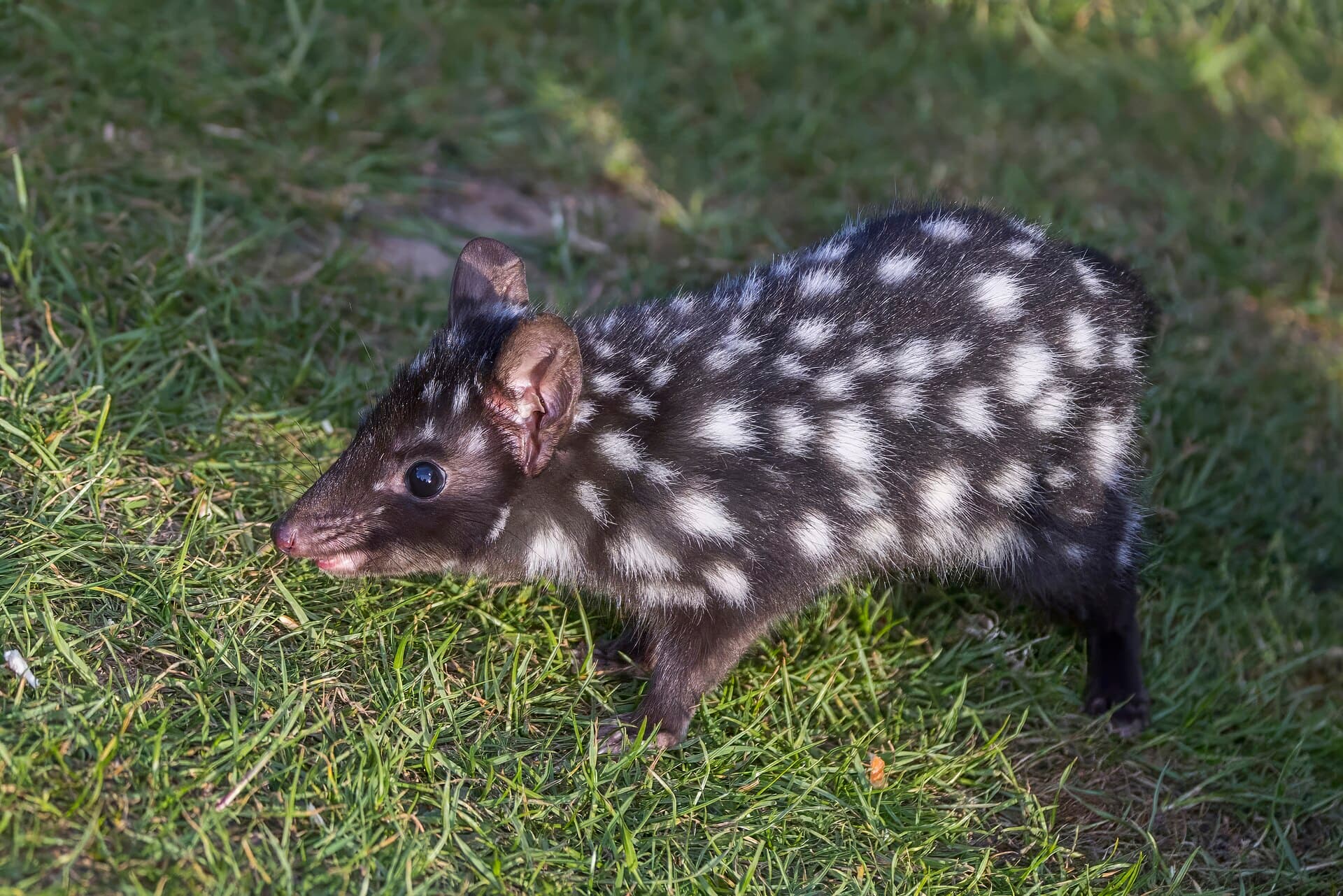
Every quoll we collar gets an identifier. For most of QED's history that identifier has been a code: a site letter, a season number, a sequence. F-MP-24-007 is a female, Mitchell Plateau, FY24, the seventh animal handled. It is precise, it sorts correctly in a spreadsheet, and it is completely forgettable.
The case against naming individuals is a real one and we want to state it fairly. Names invite anthropomorphism. They make it harder to report a death plainly. They can quietly bias a field team toward the animals they have named and away from the ones they have not. A research program that names its subjects is a research program that has to work harder to stay honest.
And yet the field teams name them anyway. They always have. F-MP-24-007 has been "Agatha" since the night she was first trapped, because she is large, unhurried, and faintly disapproving. The names do not appear in any dataset. They appear in the truck, in the camp logbook, and — increasingly — in these dispatches.
We have decided to stop pretending otherwise. From this issue, Field Notes will use field names where the team uses them, alongside the code on first mention. The code is what the science runs on. The name is how a reader two thousand kilometres away comes to care whether Agatha makes it through the wet. We have concluded we need both.