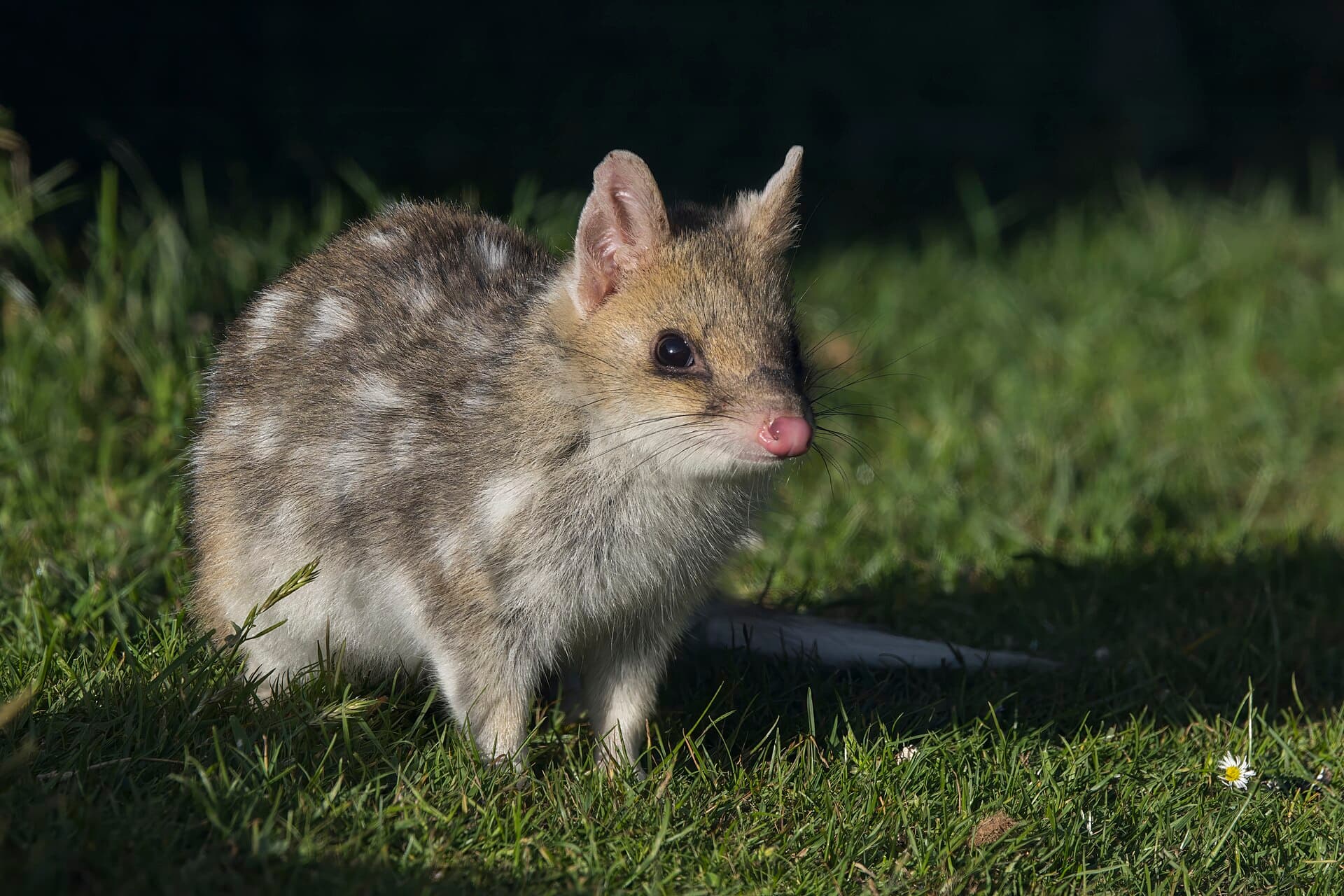
The wet season finished early this year. By the second week of April the access tracks to the Mitchell Plateau base camp had dried enough to push three troop-carriers in. We left Darwin on a Tuesday morning with twelve collars, four anaesthetic kits, two satellite phones, and a chest freezer of toad sausages.
Pobassoo Island is small, toad-free, and — as far as the historical record goes — has never held quolls. That last point matters. A translocation onto occupied ground is a negotiation; a translocation onto empty ground is closer to arithmetic. We had spent two field seasons confirming the island could carry a founding population, and the modelling said twelve was a sensible start: six females, six males, none closely related.
By the time we made the boat ramp at Truscott, every animal was crated, hydrated, and accounted for. The crossing took six hours. Quolls travel poorly and complain about it the entire way, which is, perversely, reassuring — a quiet quoll is a quoll you should be worried about.
If you want to help fund the next crossing, the form below goes straight to the translocation line item.
Want a less plugin-heavy donation experience than WordPress? Try Together.
The first week on Pobassoo went as well as we could have asked. By Friday all twelve had been re-trapped, scanned, and released a second time, which let us confirm collar fit and take a second round of body-condition scores. Two of the six females were carrying pouch young — not something we planned for, but not something we will complain about either.
Now we wait. The collars report for roughly fourteen months. We will be back on the island in August for the first full survey, and again after the next wet. A translocation is not a result; it is a hypothesis with fur on it. Issue 39 will have the August numbers.